Lead-Free vs. Leaded Solder: Which Should You Use?
Lead-free vs leaded solder compared: melting points, iron temperatures, how to hand-solder lead-free, how to tell them apart, safety, RoHS, and which to learn on.
Written by Kerem Başbuğ · Last updated September 28, 2026 · How we rank
5 min read
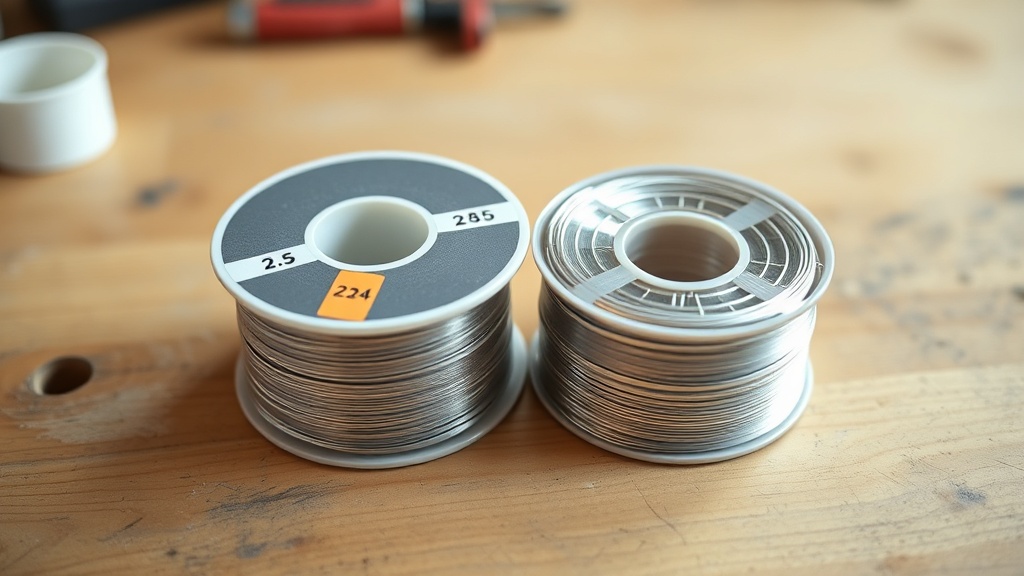
Affiliate disclosure: As an Amazon Associate we earn from qualifying purchases. We may earn a commission when you buy through links on this page — at no extra cost to you. Read our affiliate disclosure for details.
One of the first choices a new solderer faces is which solder to buy. The short answer: for learning, leaded is easier; for safety and compliance, lead-free wins. This guide covers the practical differences — melting points, iron settings, how to hand-solder lead-free well, and how to tell the two apart.
What’s the difference?
- Leaded solder is usually a 60/40 or 63/37 tin-lead alloy. It melts at a low temperature, flows beautifully and forms bright, shiny joints — which also makes it easy to see when a joint is good.
- Lead-free solder is typically a SAC alloy (tin, silver, copper) or a cheaper tin-copper alloy. It melts hotter, flows less eagerly and tends to leave a duller, satin-looking joint even when it is perfectly sound.
Melting points and iron temperatures
| Alloy | Type | Melting point | Typical iron setting |
|---|---|---|---|
| Sn63/Pb37 (63/37) | Leaded, eutectic | 183°C (361°F) | 315–340°C (600–650°F) |
| Sn60/Pb40 (60/40) | Leaded | 183–190°C (361–374°F) | 315–340°C (600–650°F) |
| SAC305 (Sn96.5/Ag3/Cu0.5) | Lead-free | 217–220°C (423–428°F) | 350–370°C (660–700°F) |
| Sn99.3/Cu0.7 | Lead-free | about 227°C (441°F) | 360–380°C (680–715°F) |
Lead-free melts roughly 35–45°C higher, which is why you run the iron hotter. The full chart by job is in our soldering iron temperature guide.
Ease of use compared
| Leaded | Lead-free | |
|---|---|---|
| Flow / wetting | Excellent | Good, needs more flux |
| Joint appearance | Shiny | Often satin or dull (normal) |
| Working window | Forgiving | Narrower — cools faster |
| Tip wear | Low | Higher |
| Ease for beginners | Easier | Harder |
| Cost | Lower | Higher, especially silver alloys |
Because lead-free runs hotter and wets less readily, it punishes weak technique more. That is the main reason it is harder to learn on — and why a good temperature-controlled station helps so much with it.
How to hand-solder with lead-free solder
Lead-free is entirely manageable by hand with a few adjustments:
- Use a slightly bigger tip. More tip contact moves heat faster, which is better than simply turning the temperature up.
- Set around 350–370°C for ordinary through-hole joints and increase only for large pads or thick wire.
- Add flux. Lead-free wets less readily than leaded, so a touch of extra flux makes a noticeable difference, especially on older or oxidised parts.
- Heat the joint, then feed solder into it — the same technique as leaded, but expect it to take a second or so longer to flow.
- Keep the tip tinned. High-tin lead-free alloys are harder on tips, so re-tin before parking the iron and clean it often. A dry, black tip is the fastest way to make lead-free miserable.
- Judge by shape, not shine. A good lead-free joint is a smooth, concave fillet that has wetted both the pad and the lead. A satin finish is normal; a ball sitting on the pad is not — see our cold solder joint guide.
If you are learning specifically on lead-free — for school or training, or because children will handle the work — practise these habits on a cheap practice board before a project you care about.
How to tell leaded and lead-free solder apart
- Read the label. Alloy codes tell you directly: Sn63Pb37 or Sn60Pb40 (Pb is lead) means leaded; SAC305, Sn96.5Ag3Cu0.5 or Sn99.3Cu0.7 means lead-free. Many lead-free products also carry a RoHS mark.
- Watch it melt. Leaded solder melts noticeably more easily at the same iron temperature.
- Look at the joint. Leaded joints are bright and mirror-like; lead-free joints are usually satin.
- Check the product. Most consumer electronics made for the EU and many other markets since the mid-2000s use lead-free solder, which matters when you repair them.
Mixing leaded and lead-free
Avoid mixing the two on the same joint where reliability or compliance matters — the resulting alloy is no longer lead-free and its properties are unpredictable. In hobby repair, one mix is common and useful: adding a little leaded solder to an old lead-free joint lowers its melting point and makes it much easier to remove with a solder sucker or wick. Just remember the finished repair is no longer lead-free.
Safety and regulations
Lead is toxic, so the obvious advantage of lead-free is no lead exposure — relevant for children, anything handled by others and products sold commercially. The RoHS directive requires lead-free solder in most consumer electronics sold in the EU and many other markets.
With leaded solder, the realistic exposure route is hand-to-mouth: residue on your fingers ending up on food or your face. Wash your hands after soldering, do not eat at the bench and keep solder away from children. Separately, both solders release flux fumes when heated; those fumes are what you breathe at the bench, so ventilation and fume extraction matter no matter which you choose.
So which should you buy?
- Learning at home, by yourself? Leaded 63/37 or 60/40 (0.6–0.8 mm) is the gentlest way to build technique. Wash your hands and ventilate. Our pick is a spool of 60/40 rosin-core solder.
- Soldering with or for kids and teens, or building something others will handle? Choose lead-free.
- Building products to sell, or in a RoHS region? Lead-free is required.
Whatever you pick, get thin, rosin-core solder so flux is built in — our solder wire guide explains the diameters and alloy codes — and pair it with the right iron and a practice kit. Then work through our beginner soldering guide.
Recommended kits from this guide
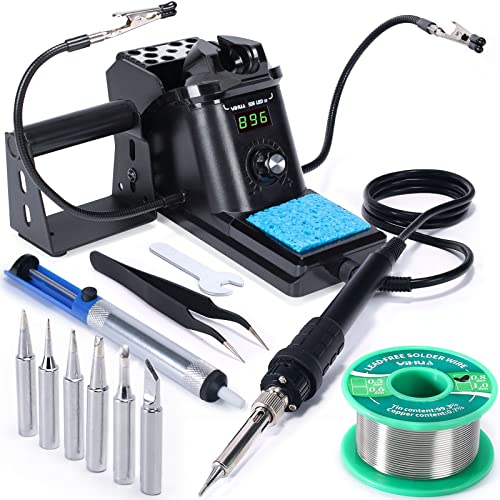
YIHUA
YIHUA 926 III 60W Soldering Station
A temperature-controlled station bundled with everything to start.
We earn a commission, at no extra cost to you.

HGMZZQ
HGMZZQ 60/40 Rosin-Core Solder Wire
Classic 60/40 rosin-core wire — the easiest solder to learn on.
We earn a commission, at no extra cost to you.
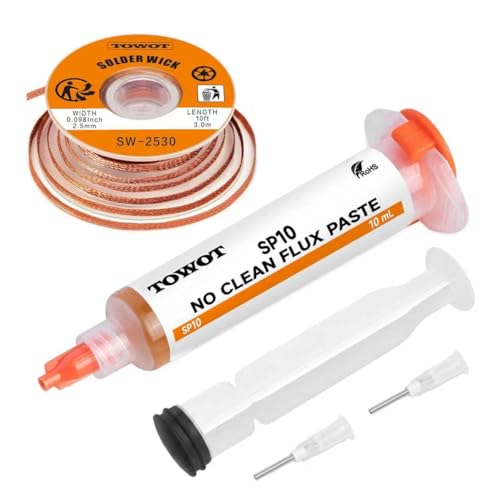
TOWOT
TOWOT Solder Wick & Flux Kit
Solder braid plus no-clean flux — the cleanup duo.
We earn a commission, at no extra cost to you.