Skip to content
SolderingPracticeKit

The Best Multimeters for Electronics and Soldering

A multimeter is the second tool every solderer needs, right after the iron. Most kit faults — a joint that looks fine but does not connect, a solder bridge, a reversed diode — are found in seconds with a continuity beeper. We ranked the meters worth owning, from a budget first meter to the professional tool people keep for decades.

Written by · Last updated September 28, 2026 · How we rank

Affiliate disclosure: As an Amazon Associate we earn from qualifying purchases. We may earn a commission when you buy through links on this page — at no extra cost to you. Read our affiliate disclosure for details.

At a glance

Product Best For Our Score Price Amazon link
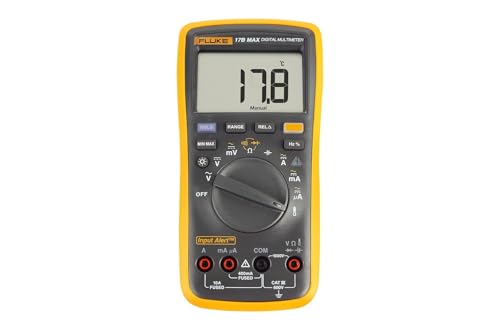
Fluke 17B+ Digital Multimeter, for Electrical Applications, Measures AC/DC Voltage 1000V, Current Measurements to 10A, Resistance, Continuity, Diode, Capacitance, Frequency, and Temperature Testing
Best Professional Multimeter Fluke 17B+ Digital Multimeter
Serious hobbyists and anyone doing regular electrical work who wants a buy-once meter.
9.2
See on Amazon $$$ Check Price →
Hobbyists who want a single meter for electronics, cars and home troubleshooting.
8.8
See on Amazon $ Check Price →
People who want one sturdy meter for electronics and occasional household electrical checks.
8.5
See on Amazon $ Check Price →
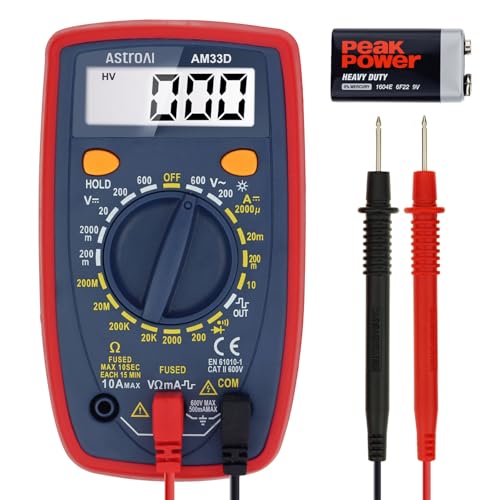
AstroAI Digital Multimeter Tester 2000 Counts with DC AC Voltmeter and Ohm Volt Amp Meter; Measures Voltage, Current, Resistance, Continuity and Diode, Blue
Best Budget Multimeter AstroAI AM33D Digital Multimeter
Kit builders and beginners who need a first meter for continuity and voltage checks.
8.4
See on Amazon $ Check Price →

The multimeters, reviewed

1 Best Professional Multimeter
Fluke 17B+ Digital Multimeter, for Electrical Applications, Measures AC/DC Voltage 1000V, Current Measurements to 10A, Resistance, Continuity, Diode, Capacitance, Frequency, and Temperature Testing
Check Price →

We earn a commission, at no extra cost to you.

Fluke

Fluke 17B+ Digital Multimeter

9.2 / 10
Best for: Serious hobbyists and anyone doing regular electrical work who wants a buy-once meter.

The buy-once meter. Overkill for kit building alone, but the one to own if the meter also comes out for household wiring or car electrics.

Watch out for: Several times the price of a hobby meter

Read the full Fluke 17B+ Digital Multimeter review — pros, cons and verdict →
2 Best Value Multimeter
AstroAI Digital Multimeter, True RMS 6000 Counts Auto-Ranging Volt Meter for Automotive & Home Electrical Troubleshooting, AC/DC Voltage Current Resistance Continuity Capacitance Temperature Tester
Check Price →

We earn a commission, at no extra cost to you.

AstroAI

AstroAI True RMS 6000-Count Auto-Ranging Multimeter

8.8 / 10
Best for: Hobbyists who want a single meter for electronics, cars and home troubleshooting.

Our overall pick for most benches: auto-ranging and True RMS remove the two frustrations of basic meters, and capacitance mode helps diagnose kits as well as test joints.

Watch out for: Auto-ranging is slightly slower to settle than manual

Read the full AstroAI True RMS 6000-Count Auto-Ranging Multimeter review — pros, cons and verdict →
3 Most Rugged Budget Meter
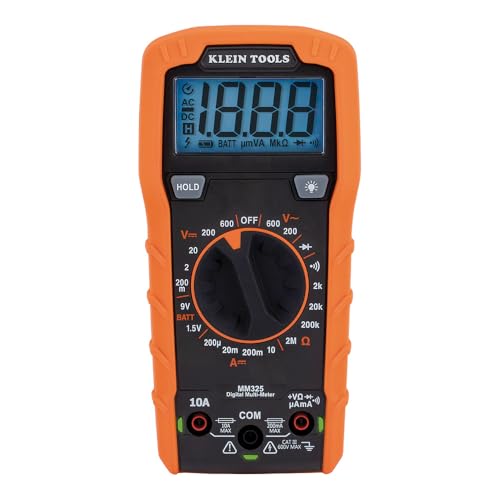
Klein Tools MM325 Multimeter, Digital Manual-Ranging 600V AC/DC Voltage Tester, Tests Batteries, Current, Resistance, Diodes, and Continuity
Check Price →

We earn a commission, at no extra cost to you.

Klein Tools

Klein Tools MM325 Manual-Ranging Multimeter

8.5 / 10
Best for: People who want one sturdy meter for electronics and occasional household electrical checks.

The pick for a meter that lives in a toolbox as well as on the bench — a trade-brand build with a battery test function, at a budget price.

Watch out for: Manual ranging means choosing the range yourself

Read the full Klein Tools MM325 Manual-Ranging Multimeter review — pros, cons and verdict →
4 Best Budget Multimeter
AstroAI Digital Multimeter Tester 2000 Counts with DC AC Voltmeter and Ohm Volt Amp Meter; Measures Voltage, Current, Resistance, Continuity and Diode, Blue
Check Price →

We earn a commission, at no extra cost to you.

AstroAI

AstroAI AM33D Digital Multimeter

8.4 / 10
Best for: Kit builders and beginners who need a first meter for continuity and voltage checks.

The meter we suggest first because of the continuity beeper: it finds the unconnected joints and solder bridges behind most kit faults, for very little money.

Watch out for: 2000-count resolution is basic for precision work

Read the full AstroAI AM33D Digital Multimeter review — pros, cons and verdict →

How to choose a multimeter for electronics

The features that matter for soldering

FeatureWhy it mattersDo you need it?
Continuity beeperFinds open joints and solder bridges without looking at the screenEssential
Diode testConfirms LED and diode orientationEssential
Auto-rangingYou pick the quantity, the meter picks the rangeStrongly recommended
CapacitanceChecks suspect capacitors in kits and repairsUseful
True RMSAccurate AC readings on distorted waveformsFor AC and electrical work
Safety rating (CAT)Protection on high-energy mains circuitsFor household wiring

Counts, ranging and accuracy

"Counts" describes display resolution: a 2000-count meter shows up to 1999 before changing range, a 6000-count meter up to 5999. More counts means finer readings, which matters for precision measurement rather than everyday checks. Auto-ranging is the bigger quality-of-life upgrade for beginners, because choosing the wrong range is the most common source of confusing readings.

Using a meter on your first kit

Power off before measuring resistance or continuity, and move the red lead back to the voltage socket after measuring current — leaving it in the current socket is how most meter fuses get blown. Our cold solder joint guide shows what to look for once the meter has found a bad connection, and common soldering mistakes covers the faults the continuity beeper catches most often.

Building out a full bench? See the electronics workbench essentials for the order to buy tools in, plus our rankings of bench power supplies and oscilloscopes for beginners.

Frequently asked questions

What is the best multimeter for beginners in electronics?
An auto-ranging True RMS meter such as the AstroAI 6000-count model is the easiest to learn on: you choose what to measure and the meter picks the range. If budget is tight, a basic 2000-count meter with a continuity beeper still covers every check a kit builder needs.
What should I look for in a multimeter for soldering projects?
A loud continuity beeper, DC voltage and resistance modes, and a diode test cover almost all kit fault finding. Capacitance, auto-ranging and True RMS are useful extras. Safety ratings matter mainly if the meter will also be used on mains wiring.
Do I need a True RMS multimeter?
For batteries and DC electronics, no. True RMS matters for accurate AC readings on distorted waveforms — from dimmers, motor drives and switching supplies. If you also do household or automotive work, it is worth having.
Is a Fluke worth the money for a hobbyist?
Only if the meter will do regular electrical work or you want one that lasts for decades. For hobby electronics alone, a good budget auto-ranging meter makes the same everyday measurements.
How do you check a solder joint with a multimeter?
With the circuit unpowered, use continuity mode between the component lead and the track it should reach. A beep confirms the connection; silence points to a cold or cracked joint. Test neighbouring pins too, to catch solder bridges.