Soldering vs Welding vs Brazing: What's the Difference?
Soldering, brazing and welding compared: temperatures, how each joint forms, strength, equipment, which metals each joins — and whether you can solder instead of weld.
Written by Kerem Başbuğ · Last updated September 16, 2026 · How we rank
5 min read
Affiliate disclosure: As an Amazon Associate we earn from qualifying purchases. We may earn a commission when you buy through links on this page — at no extra cost to you. Read our affiliate disclosure for details.
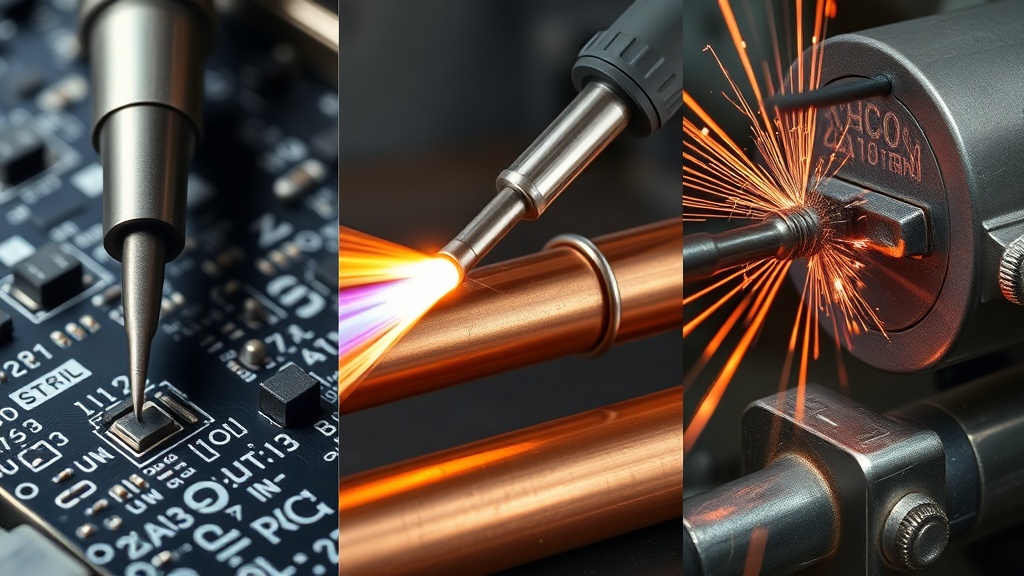
Soldering, brazing and welding all join metal, and people often use the words interchangeably — but they are three distinct processes separated mainly by temperature and how the joint actually forms. Understanding the difference makes it obvious why electronics are soldered and never welded.
The one key distinction
Everything comes down to a single question: do the base metals melt?
- Welding: yes. The base metals themselves melt and fuse together, often with added filler. This needs very high heat.
- Brazing and soldering: no. The base metals stay solid. A separate, lower-melting filler metal flows into the joint and bonds to their surfaces — like a very strong, metallic glue that wets the metal.
Brazing and soldering are essentially the same process; the only difference between them is temperature.
Soldering vs brazing vs welding at a glance
| Soldering | Brazing | Welding | |
|---|---|---|---|
| Temperature | Below 450°C (840°F) | Above 450°C (840°F), below base metal’s melting point | Melts the base metal — around 1,500°C for steel |
| Base metal melts? | No | No | Yes |
| Filler | Tin-based solder | Brass, bronze or silver alloys | Rod or wire matched to the base metal |
| Joint strength | Low | High | Highest |
| Typical heat source | Soldering iron, or a torch for plumbing | Gas torch, furnace or induction | Electric arc (MIG, TIG, stick), gas or laser |
| Joins dissimilar metals? | Yes | Yes, very well | Usually similar metals only |
| Typical uses | Electronics, wiring, jewellery, copper pipe | HVAC, plumbing, tooling, carbide tips | Structures, vehicles, machinery, fabrication |
| Beginner equipment | Low cost | Moderate | Higher cost, plus protective gear |
The 450°C line is the widely used boundary between soldering and brazing. Electronics soldering sits much lower still — typically 180–370°C depending on the solder alloy and the iron setting.
How each joint forms
Soldering relies on wetting: molten solder, helped by flux, flows across the clean metal surfaces and bonds to them as it cools. The base metal never changes state. This gentleness is exactly why it suits delicate components — you can join a wire to a circuit board without harming either.
Brazing works the same way but hotter, with a stronger filler (often brass or silver alloy). The filler is drawn into a tight-fitting joint by capillary action. The higher temperature and tougher filler produce a much stronger joint — strong enough for refrigeration lines, tooling and many metalwork repairs — while still not melting the base metal.
Welding is fundamentally different: it melts the base metals so they become one continuous piece. That gives the strongest joint of all, which is why it builds bridges, cars and ships — but the heat would instantly destroy any electronic component.
Strength vs delicacy
There is a clear trade-off:
- Welding — strongest, but brutal heat. Structural metal only.
- Brazing — strong, joins dissimilar metals well, moderate heat. Plumbing, HVAC, repairs.
- Soldering — least strong mechanically, but precise and gentle. Electronics, jewellery, fine work.
For electronics the “weakness” of soldering is irrelevant — the joint only needs to carry a small current and hold a light component — while its gentleness is essential. It is also why a wire joint should be mechanically sound before you solder it: solder is a conductor, not a structural glue.
Can you solder instead of welding?
For some jobs, yes — but only where strength is not the point:
- Good candidates: electrical connections, sealing seams in thin sheet metal, copper plumbing, small brackets that carry no load, stained glass and decorative metalwork.
- Never: anything structural, load-bearing, exposed to high temperatures, or safety-critical — trailer hitches, frames, brackets under stress.
If a joint must be strong but you cannot weld, brazing is the usual alternative. It handles far more stress than solder and joins different metals — for example copper to steel — without melting either.
Which metals can you solder, braze or weld?
- Soldering works best on copper, brass, silver and tin-plated metals — exactly the metals used in electronics. Clean steel can be soldered with the right flux. Aluminum is the classic problem: its oxide layer reforms instantly, so it needs special aluminum solder and flux.
- Brazing joins most common metals, including combinations like copper to steel, which makes it popular for repairs and refrigeration.
- Welding generally joins the same or similar metals — steel to steel, aluminum to aluminum — and each needs its own technique and filler.
Where they overlap
A few cases blur the lines and confuse people searching for the difference:
- Plumbers “sweat” copper pipe with a torch. It uses a flame, but it is still soldering, because the filler melts below 450°C and the copper never melts.
- Silver soldering is often brazing. Many “silver solder” alloys melt above 450°C, so technically they braze — the name is a hangover from older usage.
- Battery packs are spot-welded. Nickel strip is joined to lithium cells with a resistance spot welder, a quick pulse that fuses metal with little heat reaching the cell — see our guide to soldering battery tabs for when soldering is and is not appropriate.
Safety differences
- Soldering: low heat, but ventilate flux fumes, wear safety glasses and wash your hands after handling leaded solder.
- Brazing: open flame and much higher heat — work away from anything flammable and use proper eye protection.
- Welding: intense UV light, sparks and fumes require an auto-darkening helmet, gloves, protective clothing and good ventilation.
So which do you need?
If you are here to build circuits, fix gadgets or assemble a practice kit, the answer is always soldering — with a temperature-controlled iron, thin rosin-core solder and a little flux. Welding and brazing belong to the metal shop, not the electronics bench. Ready to start? Our beginner soldering guide walks you through your first joint.
Recommended kits from this guide

amomii
amomii Testudo Soldering Practice Kit
Three real gadgets, guided tutorials, and an Arduino-compatible brain.
We earn a commission, at no extra cost to you.

HGMZZQ
HGMZZQ 60/40 Rosin-Core Solder Wire
Classic 60/40 rosin-core wire — the easiest solder to learn on.
We earn a commission, at no extra cost to you.
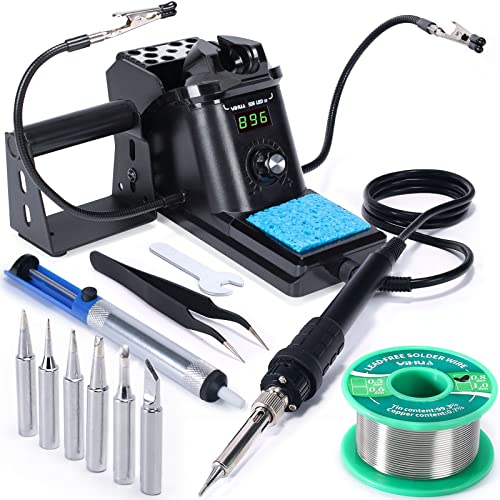
YIHUA
YIHUA 926 III 60W Soldering Station
A temperature-controlled station bundled with everything to start.
We earn a commission, at no extra cost to you.