How to Use Soldering Flux (and Which Type to Buy)
How flux works in soldering, the types and forms (paste, pen, liquid, gel), how to apply it for through-hole, SMD and wires, and how to clean the residue.
Written by Kerem Başbuğ · Last updated September 28, 2026 · How we rank
5 min read
Affiliate disclosure: As an Amazon Associate we earn from qualifying purchases. We may earn a commission when you buy through links on this page — at no extra cost to you. Read our affiliate disclosure for details.
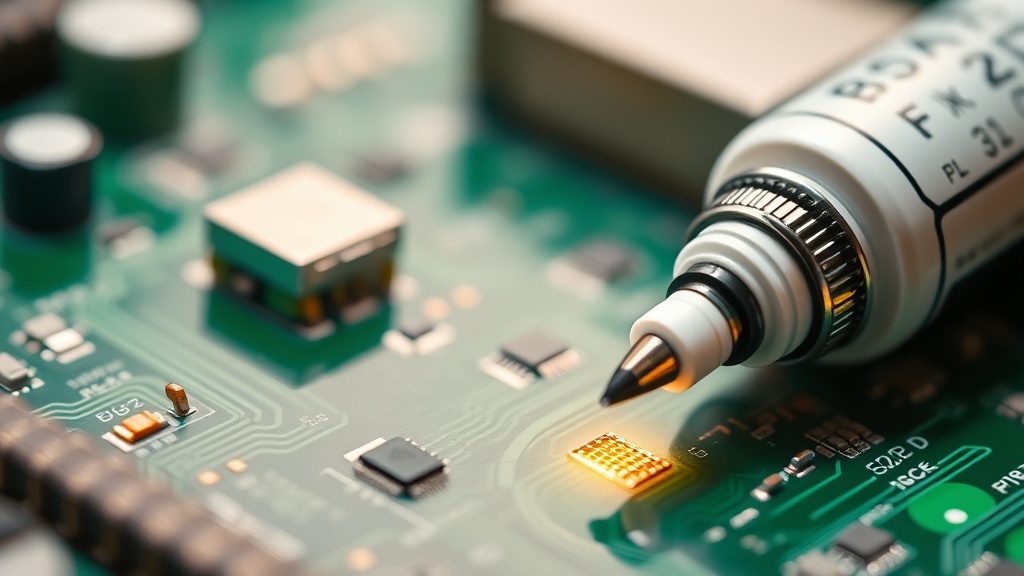
Ask an experienced solderer for their single best tip and a surprising number will say the same word: flux. It is the difference between solder that beads up and refuses to stick and solder that flows into a joint like water finding its level. Here is what flux actually does and how to use it.
What flux does
When metal heats up in air it forms a thin layer of oxide, and solder will not bond to oxide. Flux is a mild chemical cleaner that, when heated, strips that oxide away and stops it reforming for the few seconds you need. It also lowers the surface tension of molten solder so it wets the joint — spreading into a smooth, shiny fillet instead of sitting in a dull ball.
Every good solder joint relies on flux. The only question is whether the flux already inside your solder is enough, or whether you need to add more.
How flux works, step by step
- Oxide forms. Copper, tin and the plating on component leads react with air, and heating speeds this up. A thin oxide film is enough to stop solder bonding.
- Flux activates with heat. The active ingredients in the flux — organic acids in rosin, for example — become effective once warm and chemically break down that oxide.
- Flux shields the joint. A molten film of flux covers the metal and stops fresh oxide forming during the few seconds you are soldering.
- Solder wets the clean metal. With the oxide gone and surface tension lowered, molten solder spreads across the pad and up the lead instead of balling up.
That is why flux burns off if the iron is far too hot: once it has cooked away, the protection is gone, and the solder stops flowing — see our temperature guide.
The types of flux
- Rosin / RMA flux — the classic. Made from pine resin, activated by heat, excellent for electronics. Leaves a sticky amber residue that is non-corrosive but worth cleaning with isopropyl alcohol for a tidy finish.
- No-clean flux — leaves a minimal, safe residue you can usually leave in place. The most convenient choice for hobby work and the most common in flux pens and modern pastes.
- Water-soluble flux — the most aggressive and best at cleaning heavily oxidised metal, but the residue is corrosive and must be washed off completely with water.
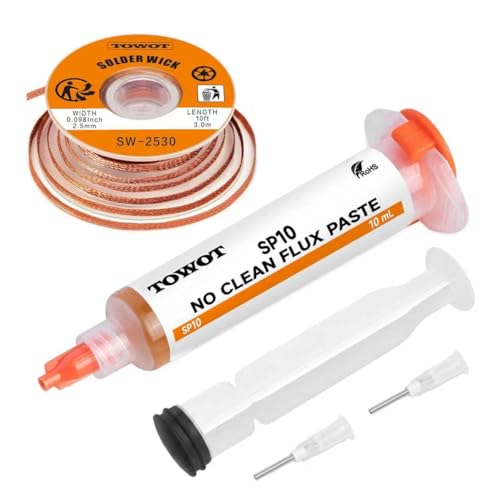
For learning and general electronics, a no-clean flux pen or paste is the easiest starting point. Our recommended solder wick and flux kit pairs a tube of no-clean paste with desoldering braid, which covers most situations a beginner meets.
Flux forms: paste, pen, liquid or gel?
| Form | How it is applied | Best for |
|---|---|---|
| Flux core (inside solder wire) | Automatically as the solder melts | Everyday through-hole joints |
| Flux pen | Wiped on like a marker | Tidy, precise application; SMD pins and rework |
| Paste / gel (syringe or tub) | Small dab with the syringe tip or a toothpick | SMD, drag soldering, hot-air rework — stays where you put it |
| Liquid (bottle or brush) | Brushed or dropped on | Tinning wires, larger areas, dip soldering |
What is a flux pen?
A flux pen is a marker-style applicator filled with liquid flux, usually no-clean. You press the tip to release flux and wipe it across the pads or pins you are about to solder. It gives a thin, controlled layer with far less mess than paste, which makes it ideal for fine-pitch parts and for reworking joints without flooding the board.
How to use flux paste and pens
- Apply a small amount to the joint — a dab of paste on the pad and component leg, or a quick swipe of a flux pen. You need very little.
- Heat the joint, not the flux. Bring your iron onto the pad and leg as normal. The flux will bubble and activate as the metal reaches temperature.
- Feed solder into the joint. With the oxide cleared, the solder will flow in and wet both surfaces, forming a clean, concave fillet.
- Clean up if needed. Wipe rosin or water-soluble residue away with isopropyl alcohol; no-clean residue can usually stay.
A clean tip and the right temperature matter too — work at around 315–340°C (600–650°F) with leaded solder, and keep your tip clean and tinned.
Using flux for different jobs
- Through-hole joints: the flux in your solder wire is usually enough. Add a touch only if a pad or lead is dull and the solder beads up.
- Surface-mount parts: apply flux to the pads before placing the part, tack one side, then solder the rest. For fine-pitch chips, paste or a pen across the pins makes drag soldering possible.
- Wires: dip or brush liquid flux on stripped strands before tinning, especially on older or dull copper — see how to solder wires together.
- Fixing a bad joint: a dab of flux and a reflow cures most cold joints in seconds.
Cleaning flux residue
- No-clean flux: safe to leave; clean with isopropyl alcohol only if you want a tidy finish.
- Rosin (R/RMA): non-corrosive but sticky; scrub with isopropyl alcohol (90% or stronger) and a stiff brush, then wipe.
- Water-soluble: must be washed off promptly with warm water, ideally deionised, then dried thoroughly — leftover residue is corrosive.
When extra flux makes the biggest difference
- Desoldering and rework — flux makes old solder melt and flow again so it lifts cleanly with a solder sucker or wick.
- Surface-mount (SMD) — fine-pitch parts need far more flux than solder wire carries; a pen or paste is essential.
- Oxidised boards or legs — old or cheap components often have dull, oxidised leads that solder refuses to wet until you add flux.
Common mistakes
Beginners either skip flux entirely — and fight joints that will not take — or drown the board in it. Use a little, let it do its job, and clean up active residues. Pair good flux habits with the right solder and you will be amazed how much easier soldering becomes.
Once you are comfortable, put it into practice on a forgiving practice board or work through our beginner soldering guide.
Recommended kits from this guide
TOWOT
TOWOT Solder Wick & Flux Kit
Solder braid plus no-clean flux — the cleanup duo.
We earn a commission, at no extra cost to you.

HGMZZQ
HGMZZQ 60/40 Rosin-Core Solder Wire
Classic 60/40 rosin-core wire — the easiest solder to learn on.
We earn a commission, at no extra cost to you.
FNIRSI
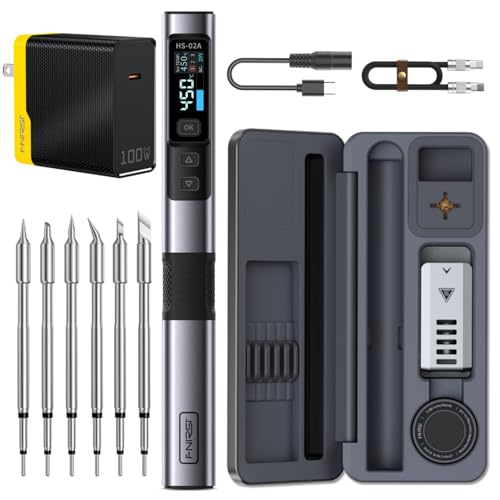
FNIRSI HS-02A Smart Soldering Iron
100W of mains power, six tips, and instant temperature control.
We earn a commission, at no extra cost to you.