Skip to content
SolderingPracticeKit

Solder Sucker vs Solder Wick

Every beginner makes mistakes — and these two tools are how you undo them. A solder sucker vacuums molten solder away; solder wick soaks it up. They sound like rivals, but they are really a team. Here is what each does best, and why you probably want both.

Affiliate disclosure: As an Amazon Associate we earn from qualifying purchases. We may earn a commission when you buy through links on this page — at no extra cost to you. Read our affiliate disclosure for details.

Best Solder Sucker Solder Sucker Tool No Clog Silicone-Tip Manual Desoldering Pump Soldering Accessories for Solder Remover

VIRALLOY

VIRALLOY Solder Sucker

8.7 / 10

A no-clog desoldering pump that fixes your mistakes fast.

Best for
Beginners who need an easy way to undo and redo joints.
Price tier
$
Check Price →

We earn a commission, at no extra cost to you.

Read full review →

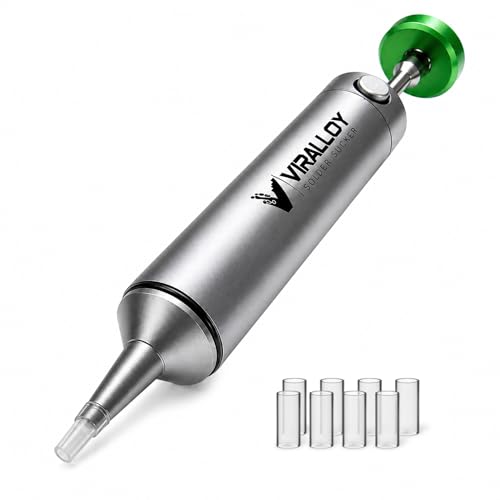
VIRALLOY Solder Sucker

  • Manual spring-loaded vacuum pump
  • No-clog silicone tip
  • One-handed operation
  • Pocket size, no power required

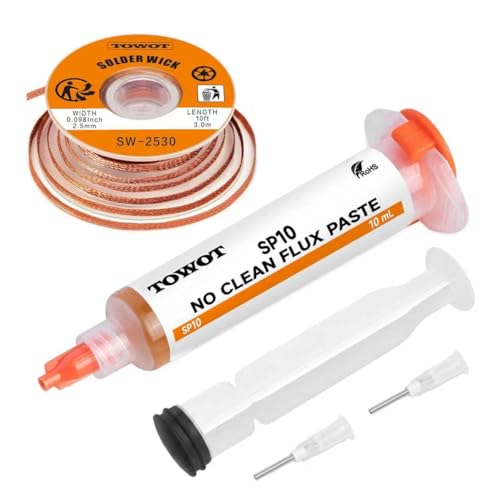
TOWOT Solder Wick & Flux Kit

  • 10ft desoldering braid (solder wick)
  • No-clean flux paste (10cc)
  • For SMD rework and flat pads
  • Improves wetting and flow

What is solder wick?

Solder wick (also called desoldering braid) is a flat braid of fine copper wire, usually coated with flux. When you press it onto a joint with a hot iron, capillary action pulls the melted solder into the braid, leaving a clean pad. It is used to remove excess solder, clear solder bridges between pins and clean pads before fitting a new part.

What is a solder sucker?

A solder sucker (desoldering pump) is a spring-loaded vacuum tool. You cock the plunger, melt the joint, hold the nozzle against it and press the release — the sudden suction pulls molten solder out of the joint and the hole. It is the quickest way to free through-hole component leads.

Two tools, two jobs

A solder sucker like the VIRALLOY Solder Sucker is a spring-loaded vacuum pump. Melt a through-hole joint, hold the nozzle over it, and fire — the molten solder is sucked clean out of the hole. It is the fastest way to free a stuck component from a board and the tool you reach for first on through-hole work.

Solder wick — the braid in the TOWOT Solder Wick & Flux Kit — works by capillary action. Lay it over a joint, heat it, and the solder climbs up into the copper braid. It cannot empty a deep hole the way a pump does, but it is unbeatable for lifting thin films of solder off flat pads, cleaning up bridges, and any surface-mount work where a pump simply cannot reach.

Reach for the VIRALLOY Solder Sucker when…

  • You are removing a through-hole component from a board.
  • You need to empty a hole of solder quickly.
  • You want a reusable tool that never runs out.

Reach for the TOWOT Solder Wick & Flux Kit when…

  • You are cleaning solder off flat pads or fixing bridges.
  • You are doing fine-pitch or surface-mount rework.
  • You want the included flux to make every joint flow better.

Our verdict

This is not really an either/or. A solder sucker and a roll of wick cost very little together and cover every desoldering job between them — which is why both sit on our recommended accessories list. If you can only buy one to start, get the sucker for general through-hole work, then add wick the first time you meet a flat pad or a solder bridge. Learn the technique in our how to desolder guide.
Frequently asked questions

Solder sucker or solder wick — which is better?
Neither is strictly better; they do different jobs. A solder sucker (desoldering pump) is best for clearing solder from through-hole holes and pads, while solder wick (desoldering braid) excels at lifting thin films of solder from flat pads and surface-mount work. Most benches want both.
Do I need both a solder sucker and wick?
Ideally yes, because they cover different situations. A sucker quickly empties a through-hole joint of a stuck component; wick cleans up the residue and handles flat or fine-pitch pads a pump cannot reach. They are both cheap, so owning the pair removes almost every desoldering headache.
Is there an alternative to solder wick?
A solder sucker is the usual alternative for through-hole joints. In a pinch, stripped multi-strand copper wire dipped in flux can act as a makeshift wick, though it works less well than proper braid. For flat surface-mount pads, real wick remains the best tool.
How do you use solder wick?
Lay the braid over the joint, press your hot iron on top, and the molten solder wicks up into the braid by capillary action. Add a little flux first for best results, and snip off the used, solder-filled section afterward. A wick-and-flux kit gives you both essentials together.
Why is my solder sucker not picking up solder?
Usually the solder was not fully molten when you triggered it, or the nozzle is clogged with old solder. Reheat the joint until the solder is liquid, position the nozzle right over it, then fire the pump. A no-clog silicone tip helps, as does clearing the pump regularly.