Skip to content
SolderingPracticeKit

YIHUA 926 III vs FNIRSI HS-02A

Two of the most capable irons in their class — a full temperature-controlled station versus a smart 100W pencil iron. Both offer proper temperature regulation and fast heat-up; what separates them is form factor, accessories and which type of work they are optimised for.

Affiliate disclosure: As an Amazon Associate we earn from qualifying purchases. We may earn a commission when you buy through links on this page — at no extra cost to you. Read our affiliate disclosure for details.

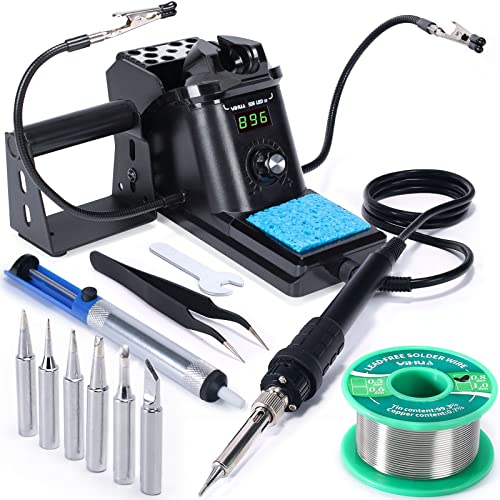
YIHUA 926 III 60W Soldering Station

  • 60W temperature-controlled station
  • Digital temperature display, °C/°F
  • Includes 6 tips, 2 helping hands, solder, sucker, tweezers
  • Auto-sleep and calibration support

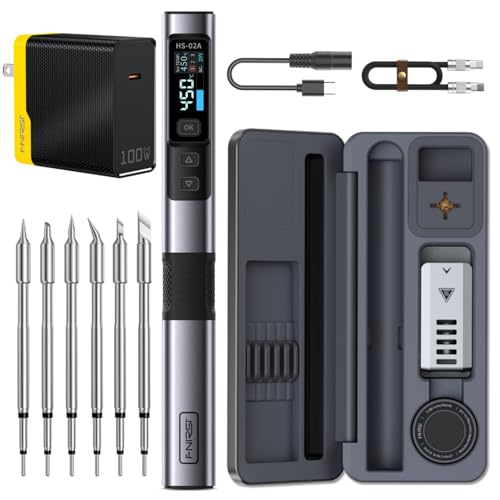
FNIRSI HS-02A Smart Soldering Iron

  • 100W corded smart iron
  • Six F245 interchangeable tips
  • Three preset temperature groups
  • 3-second fast heating, storage case

Station vs smart pencil iron — the real trade-off

The YIHUA 926 III 60W Soldering Station is a classic bench station: the base holds a regulated 60W element, the digital display shows exactly what the tip is doing, and the kit bundles six tips, helping hands, solder, a sucker, and tweezers. Everything arrives in one box. For a beginner, the bundle alone is worth it — and a station's separate base unit holds temperature more steadily under a slow, careful work pace.

The FNIRSI HS-02A Smart Soldering Iron takes a different approach: all 100W of regulation fits inside a pencil iron no bigger than a chunky pen, with a clear smart display and three preset temperatures. It heats in seconds and holds temperature under load — more so than the YIHUA, watt for watt, because 100W has more thermal headroom when you push it into a big ground plane. The storage case is a neat bonus. What it lacks is the accessory bundle; you bring your own solder, sucker and tip cleaner.

Choose the YIHUA 926 III 60W Soldering Station if…

  • You are new to soldering and want everything in one box.
  • You value the steadiness of a dedicated station base.
  • You want helping hands and consumables included.
  • Long, unhurried bench sessions are your primary use case.

Choose the FNIRSI HS-02A Smart Soldering Iron if…

  • You already have tips, solder, and accessories sorted.
  • You want a compact, high-wattage iron that travels well.
  • You tackle heavier joints where 100W headroom matters.
  • A tidy storage case appeals to you.

Our verdict

For a first iron, the YIHUA 926 III wins on completeness — the bundle means you start soldering the day it arrives, not after a second shopping trip. Once you have your bench equipped, the FNIRSI HS-02A is the more powerful and compact daily driver. If you want portability without losing the cable, also consider the cordless FNIRSI HS-03 or read our full soldering irons roundup for the complete picture.

Frequently asked questions

What is the difference between a soldering station and a smart pencil iron?
A soldering station has a separate base unit that regulates temperature and powers the iron — it holds temperature rock-steadily under load and usually comes bundled with tips, a stand and accessories. A smart pencil iron is a self-contained corded iron with an integrated display and preset temperatures, smaller and more portable, but without the dedicated base. Both offer proper temperature control; the station wins for sustained heavy work, the pencil iron wins for a smaller footprint.
Is the YIHUA 926 III or FNIRSI HS-02A better for a beginner?
Both are excellent, but the YIHUA 926 III edges it for beginners because it bundles more accessories (helping hands, solder, sucker, tweezers, six tips) and the base unit holds temperature very steadily under a beginner's slower work pace. The FNIRSI HS-02A is a stronger pick for someone who already has accessories and wants a compact, high-wattage workhorse.
Does wattage matter — 60W vs 100W?
Higher wattage means faster heat recovery between joints, not a hotter tip (temperature is still regulated). For most hobby and electronics work — practice kits, PCB rework, small repairs — 60W is more than adequate. 100W becomes genuinely useful on large ground planes, heavy cables, or high-thermal-mass joints where the iron would otherwise sag and stall.
Can I use the FNIRSI HS-02A with a practice kit?
Absolutely. The three temperature presets cover everything from fine practice-board joints to heavier through-hole work, and the six included F245 tips give you the right shape for each task. The storage case is a nice bonus if you move the iron around.